Today's date is: October 5, 2026
Genesis Chapter 28
Jacob and Esau
Jacob's Ladder and the Divine Promise
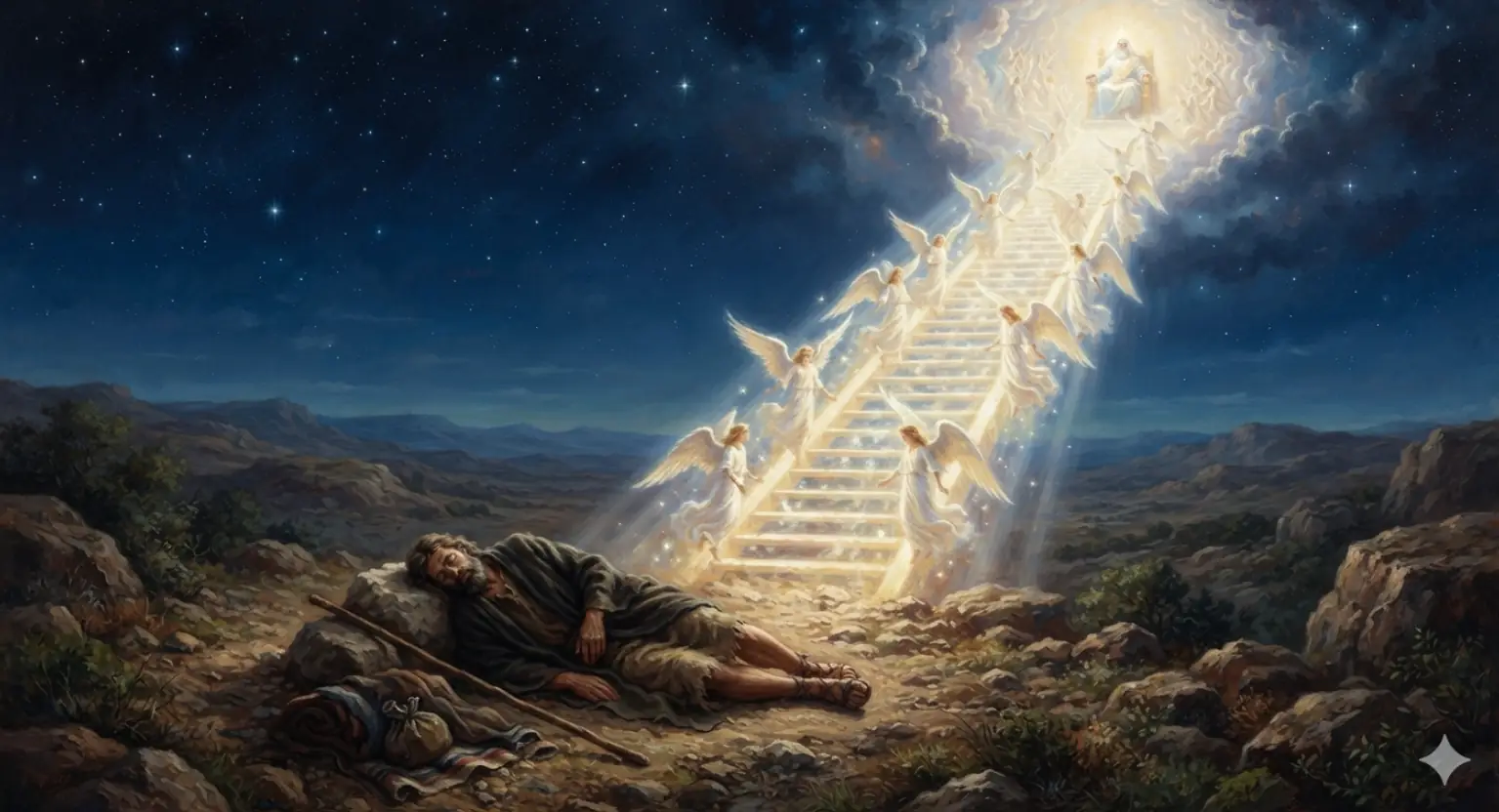
Genesis Chapter 28 centers on Jacob fleeing from his brother Esau, receiving a divine vision of a stairway to heaven at Bethel, and officially inheriting the covenant blessing of Abraham.
The Covenant Confirmed: Understanding Genesis 28
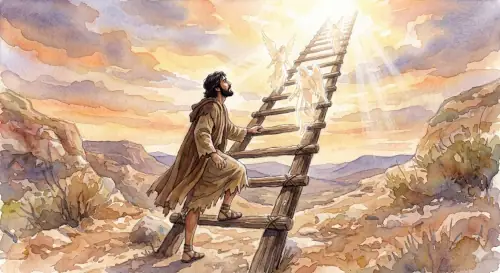
Genesis Chapter 28 marks a major turning point in the life of Jacob, transitioning him from a fugitive fleeing his brother’s wrath to a direct recipient of the divine Abrahamic covenant.
Isaac Sends Jacob to Haran (28:1–5)
- The Command:
Isaac calls Jacob, blesses him, and explicitly forbids him from marrying a Canaanite woman.
- The Journey:
Jacob is directed to travel to Paddan-aram (Haran) to the house of his uncle Laban to find a wife from his extended family.
- The Blessing:
Isaac formally confers the blessing of Abraham—fruitfulness, multiplication, and possession of the promised land—upon Jacob.
Esau’s Vain Response (28:6–9)
- Realization:
Esau observes that his Canaanite wives displease his parents and that Jacob obeyed Isaac by leaving for Paddan-aram.
- Misguided Action:
Seeking to regain parental favor, Esau marries Mahalath, a daughter of Ishmael (Abraham's son), alongside his existing Canaanite wives.
- Continued Alienation:
This human effort fails to align with God's distinct covenant line, highlighting Esau's continued spiritual disconnect.
Jacob’s Dream at Bethel (28:10–17)
- The Rest on the Run:
Stopping for the night at a certain place due to sunset, Jacob uses a stone as a pillow.
- The Vision:
Jacob dreams of a stairway (or ladder) set on the earth with its top reaching heaven, featuring angels of God ascending and descending.
- The Divine Promise:
The Lord stands above it, identifies Himself as the God of Abraham and Isaac, and promises the land to Jacob and his massive, blessing-bringing offspring.
- Awakening:
Awakening in awe, Jacob exclaims, "Surely the Lord is in this place, and I did not know it," naming the site Bethel (House of God).
Jacob’s Vow (28:18–22)
- The Pillar:
Jacob sets up his stone pillow as a sacred pillar and pours oil on top of it.
- The Condition:
Jacob makes a conditional vow—if God watches over him, keeps him safe on his journey, and brings him back to his father's house in peace, the Lord will be his God.
- The Tithe:
Jacob promises to give God a tenth of everything he receives upon his safe return.